God and the New Metaphysics by Brian Jones
God and the New Metaphysics by Brian Jones
Low stock: 3 left
Couldn't load pickup availability
Author(s): Brian Jones
Pub: Blue Dolphin Publishing, Inc
Pack Qty: 0 (Paperback)
ISBN: 9781577331612 - New
Subjects: Religion & Spirituality, Occult & Paranormal, Religious Studies, Science & Religion, Agnosticism
228mm x 152mm x 12mm
Publication: 5 July 2005Pages: 212
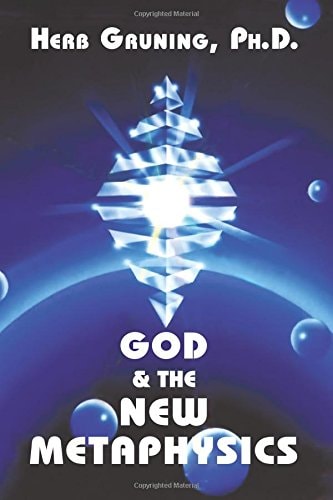
The perennial mystery of existence has inspired tomes of both scientific and metaphysical speculation over the millennia. In God and the New Metaphysics, Herb Gruning presents a fresh perspective, one that choreographs a dance between Whitehead's process theology and recent developments in physics, biology, medicine, cosmology, and several other fields. Whether discussing Heraclitus or David Bohm, morphogenetic fields or Gaia theory, Gruning is lucid, articulate, engaging, and provocative. His readers will never think of their universe in the same way again.' Stanley Krippner, Ph.D., co-author, Extraordinary Dreams and How to Work with Them, co-editor, Varieties of Anomalous Experience: Examining the Scientific Evidence 'This book is a vigorous plea for a new metaphysics capable of revealing being and becoming as the texture of both the world and the nature of God.' Maurice Boutin, Ph.D., J.W. McConnell Professor of Philosophy of Religion, McGill University, Montreal, Canada 'God and the New Metaphysics is a handy guide ('road map') for anyone venturing on philosophical excursions into the big questions surrounding the origins of the universe itself, and of life within it. It succinctly summarizes scientific advancements and their implications for the way we view the world, since (as Herb Gruning writes) 'All epistemological activity ... functions worldviewishly.' In addition to dealing with the development of the philosophy of science in the context of the clashes between science and religion, the author suggests interesting lines of inquiry to help resolve the questions which will remain in the reader's mind at the end of the book, as they do in philosophy and science to the present day.' Francine McCarthy, Professor of Earth Science and Great Books/ Liberal Studies, Brock University 'What can abide and what must change in our understanding of God and nature? Walking the ever-shifting boundary lines between religion and contemporary science and drawing on rich resources to be found on both sides, Gruning has written a well-informed, insightful, and adventuresome book, addressing this question. And while refusing to oversimplify, he manages to write lucidly about deep and complex matters.' John C. Robertson, Ph.D., Professor Emeritus, Department of Religious Studies, McMaster University 'In lucid and sparkling prose, Herb Gruning provides the inquisitive layperson with a solid summary of the history and present state of the natural sciences, together with a panoply of the most significant meta-scientific reflections on the meaning and import of those sciences for the higher purposes of human life. God and the Mew Metaphysics offers more than a road map through the highways and byways of science, philosophy, and theology. It is a traveler's guide through adjacent territories that have been explored by other travelers, with lively commentary on the usefulness of the older guidebooks. Above all, it identifies the limits of the previous explorations, and so reveals the openness of the horizons of knowledge, instilling in the reader a sense of further adventure at the edge of the known world.' Dr. James Lawler, Philosophy Department, SUNY at Buffalo 'The author gives an excellent account of the controversy surrounding science and religion as alternative avenues to truth and argues persuasively how science in general has failed to unravel some of the deep mysteries of the universe such as the origin of the universe and of life, among others.The book makes interesting reading with the author's critical look at traditional theology with respect to its stand on the nature of god and purpose of creation, and his suggestion for a new direction in this regard along the lines developed by Alfred North Whitehead and others who consider the uni
View full details