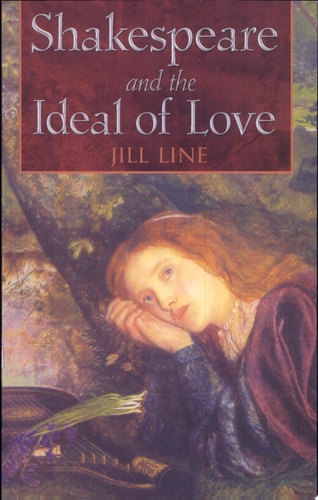
Shakespeare and the Ideal of Love by Jill Line
Shakespeare and the Ideal of Love by Jill Line
209 in stock
Couldn't load pickup availability
Author(s): Jill Line
Pub: Inner Traditions / Bear & Co
Pack Qty: 57 (Paperback)
ISBN: 9781594771453 - New
Subjects: Literary Criticism, Shakespeare, Body, Mind & Spirit, Mysticism, Philosophy, Religious
228mm x 152mm x 17mm
Publication: 28 August 2006Pages: 192
Reveals the influence of the Renaissance scholar-priest Marsilio Ficino on Shakespeare and how the Neoplatonic philosophy of love shaped the inner meaning of his work
Shows how Shakespeare's works offer a path back to the divine unity of all things
Explains the role of love in the Christian-Platonic concept of the three worlds
In Love's Labours Lost, Shakespeare talks of the true Promethean fire that is lit by the doctrine he reads in women's eyes. What is this doctrine and what is this true Promethean fire to which it gives birth? In Shakespeare and the Ideal of Love, Jill Line shows that Shakespeare shared the perennial philosophy of a long line of teachers, including Hermes Tristmegistus, Pythagoras, Plato, Plotinus, and especially the Florentine scholar and mystic Marsilio Ficino. The answer to these questions, Line claims, lies in Ficino's Christian-Platonic philosophy of love, from which all Shakespeare's plays have their genesis.
Love, according to Ficino, is the force that inspired the creation of the worlds of the angelic mind, the soul, and the material, and it is through love that each of these worlds expands into the next. Love is also the vehicle that allows human beings to make the return journey to the source of their being, where they find unity in God. This is the path on which all of Shakespeare's lovers embark. Jill Line explains how Shakespeare's plays represent more than poetic literary constructs: They are mirrors of the progress of the soul, in many conditions and situations, as it returns to the divine unity of all things.