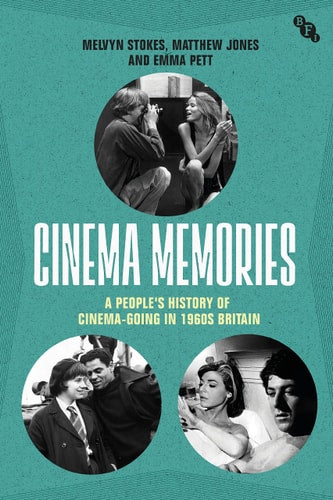
Cinema Memories: A People's History of Cinema - Going in 1960s Britain by Simon Griffiths | Robert Leach
Cinema Memories: A People's History of Cinema - Going in 1960s Britain by Simon Griffiths | Robert Leach
Low stock: 9 left
Couldn't load pickup availability
Author(s): Simon Griffiths | Robert Leach
Pub: Bloomsbury Academic
Pack Qty: 0 (Paperback)
ISBN: 9781839025297 - New
Subjects: History, Europe, Great Britain, 20th Century, Modern, Social History, Performing Arts, Film, History & Criticism, Social
233mm x 156mm x 25mm
Publication: 21 September 2023Pages: 256
The 1960s was a rich decade for British cinema audiences. Alongside Hollywood films, from Westerns such as The Man Who Shot Liberty Valance (1962) and The Dirty Dozen (1967) were musicals including West Side Story (1961), Mary Poppins (1964) and The Sound of Music (1965), and epics such as The Longest Day (1962), Cleopatra (1963) and The Greatest Story Ever Told (1965) Towards the end of the decade, a new style of filmmaking emerged, with movies such as The Graduate (1967), Bonnie and Clyde (1967), Butch Cassidy and the Sundance Kid (1969) and Easy Rider (1969). Although the total number of screens in the UK declined from over 3,000 in 1960 to little more than half this by the end of the decade, British cinema itself remained buoyant. The decade saw the release of many so-called 'kitchen sink' dramas including Saturday Night and Sunday Morning (1960), A Taste of Honey (1961) and This Sporting Life (1963), together with the 'Swinging London' films such as Darling (1965) and Alfie (1966). It witnessed the birth of the James Bond franchise with Dr No in 1962, followed by five other 007 films by 1969. The well-established 'Carry On' franchise produced many more films: 15 in all between 1960 and 1969. British director David Lean directed the epics Lawrence of Arabia (1962) and Dr Zhivago (1965). Drawing on first-hand memories from over 1000 cinema-goers, Screen Memories reveals what it was like to see these and other films in British cinemas in the 1960s. The authors explore what the social experience of cinema-going was like during this decade. They consider how cinema-goers constructed meanings from the films they watched - through a complex process of negotiation between the films concerned, their own social and cultural identities, and their awareness of changes in British society. Their examination helps the reader envision what light the cultural memory of 1960s cinema-going sheds on how the Sixties in Britain is remembered and interpreted. Either, as many have argued, a period of transformative change, or, as an era marked by considerable continuity with the 1940s and 50s. Positioning their study within debates about memory, 1960s cinema, and the seemingly transformative nature of this decade of British history, the authors reflect on the methodologies deployed, the use of memories as historical sources, and the various ways in which cinema and cinema-going came to mean something to its audiences'--
View full details