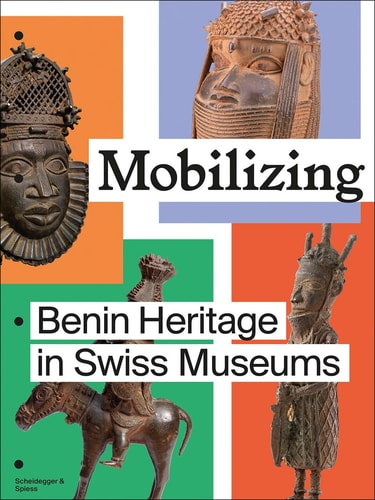
Mobilizing Benin Heritage in Swiss Museums by Esther Tisa Francini | Alice Hertzog | Alexis Malefakis | Michaela Oberhofer
Mobilizing Benin Heritage in Swiss Museums by Esther Tisa Francini | Alice Hertzog | Alexis Malefakis | Michaela Oberhofer
Low stock: 1 left
Couldn't load pickup availability
Author(s): Esther Tisa Francini | Alice Hertzog | Alexis Malefakis | Michaela Oberhofer
Pub: Antique Collectors' Club
Pack Qty: 0 (Paperback)
ISBN: 9783039421985 - New
Subjects: Arts & Photography, History & Criticism, Criticism
279mm x 210mm x 17mm
Publication: 2024Pages: 120
Features the provenance research undertaken at eight Swiss museums on their Benin collections and the dialogue on the objects' history and future with partners in Nigeria.
This multifaceted reader explores the cultural heritage of the Kingdom of Benin, in the territory of what today is Nigeria. Objects from Benin--representing the still existing kingdom and thus also a living culture--are held also in Swiss museums and, as in other countries of the global North, have become the subject of controversial debate. The richly illustrated volume offers new findings on the historical and current significance of these artifacts. Moreover, it highlights the current dialogue with partners from Nigeria and the diaspora, reflecting on the methods of cooperative research and the future of the objects currently kept in Swiss collections. Biographies of individual items and examples of mediation and exhibition practice provide an insight into interwoven histories, the international art trade, and post-colonial reconciliation work between Africa and Europe.
Mobilizing: Benin Heritage in Swiss Museums is published as part of the Benin Initiative Switzerland (2021-24), a project by eight Swiss museums focusing on provenance research on artifacts from colonial contexts. Texts and images invite reflection on artworks and values, relationships, and views of history. The close collaboration with representatives from Nigeria and the diaspora enables new forms of knowledge production. This not only sets cultural heritage in motion but also explores the museum as an institution itself.